

The rise of the new aviation giants: Airports that will change the way we travel forever
New airports, global hubs and futuristic infrastructure: the world of air travel is on the brink of a revolution. An in-depth look at the projects set to reshape how we fly and redefine the passenger experience of tomorrow—through brand-new routes, fewer layovers, cutting-edge technology and a strong focus on sustainability.
NEWS
1/26/20264 min read
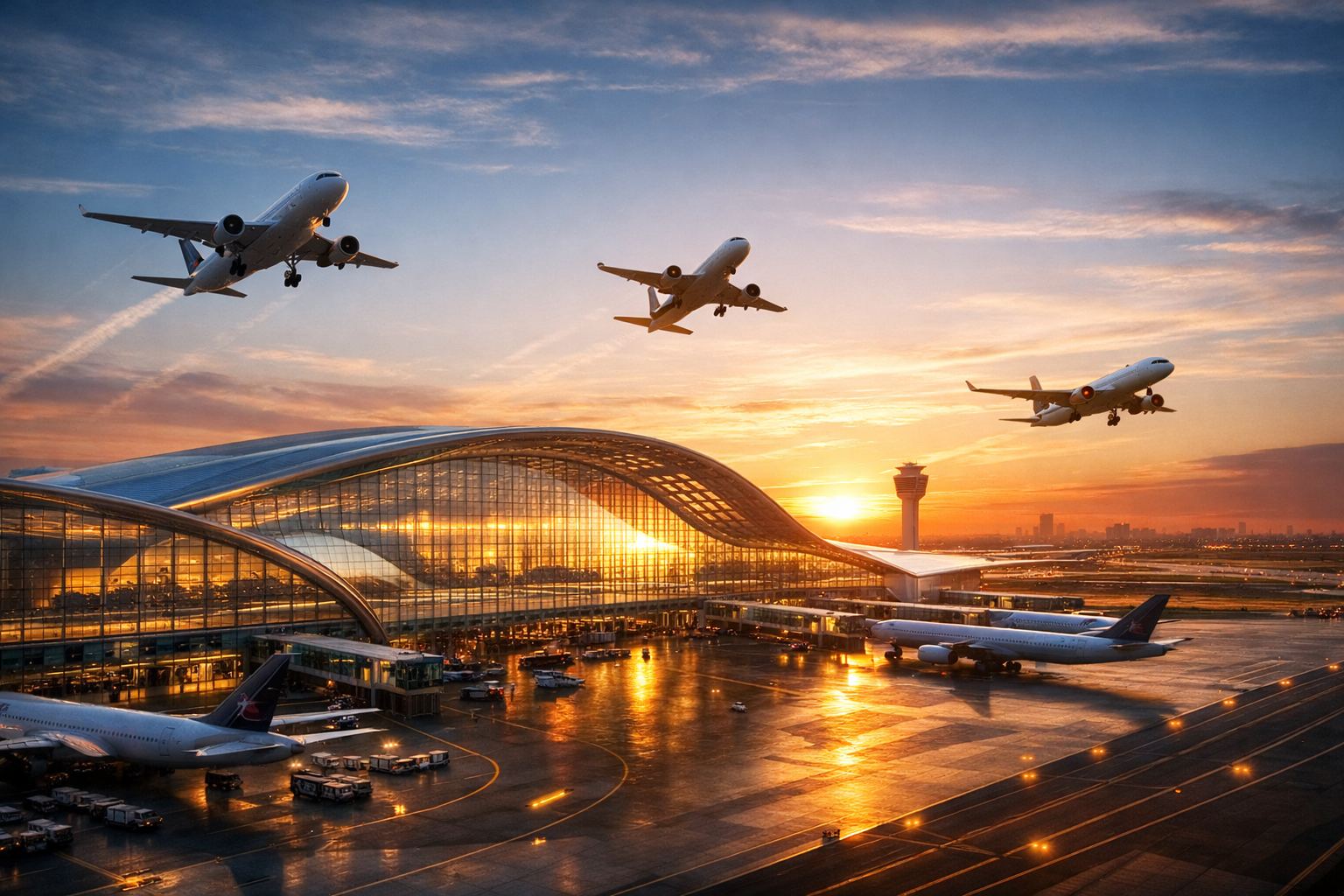
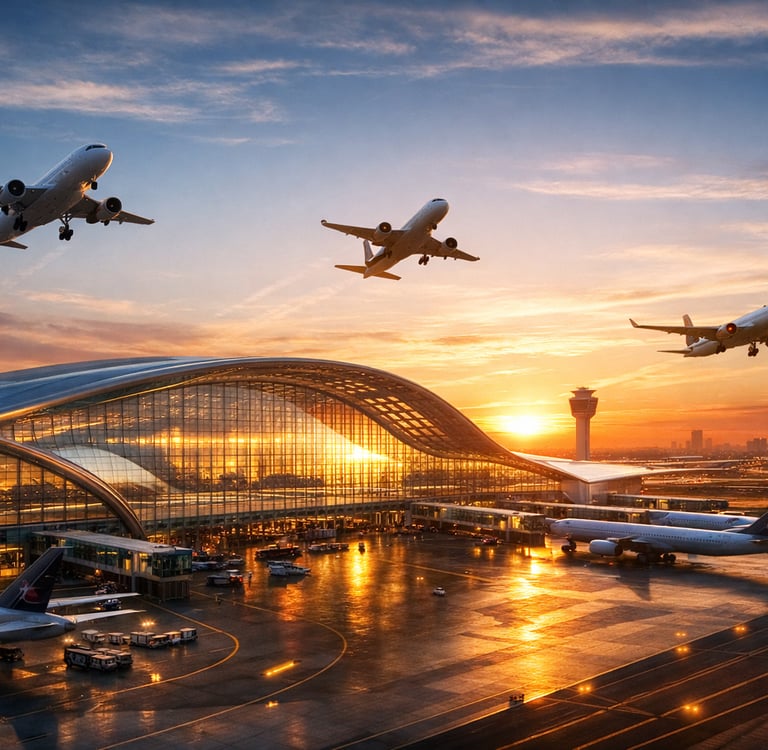
New Global Hubs: The Future of Flying Is Already Here
The aviation landscape is undergoing an unprecedented transformation.
New airport hubs are being built or expanded across the globe, designed to handle ever-growing passenger numbers, strengthen international connectivity and boost global tourism in a more efficient and sustainable way.
Long Thanh International Airport (Vietnam) — Asia’s New Giant
Located near Ho Chi Minh City, Long Thanh International Airport is set to become one of Southeast Asia’s most important hubs. Officially inaugurated in December 2025, the project aims to handle over 100 million passengers and 5 million tons of cargo per year, with multiple development phases planned through 2050.
Beyond improving connections to Europe, the Middle East and the Pacific, the airport is expected to attract major tourism and commercial investments across the region.
Bishoftu International Airport (Ethiopia) — Africa’s Next Major Hub
Africa enters the global aviation race with Bishoftu International Airport, a $7–10 billion project near Addis Ababa. Designed to serve up to 100 million passengers annually, it is set to become a key hub linking East Africa with the rest of the world by 2030.
The project also includes an “airport city” featuring advanced cargo facilities, hotels, logistics centers and MRO services (Maintenance, Repair and Operations).
Expansions Across Asia
Singapore Changi (Terminal 5): With its new terminal complex, the airport aims to exceed 153 million passengers per year, reinforcing its role as a strategic hub for Asia and Oceania.
KLIA (Kuala Lumpur): Expansion plans include new terminals and a fourth runway to support continued growth.
New Manila International (Bulacan): An ambitious project currently under development that could reach up to 200 million passengers annually once completed.
These investments directly respond to the surging demand for air travel in Southeast Asia—one of the fastest-growing aviation markets in the world.
Europe and Other Global Developments
Centralny Port Komunikacyjny (Poland)
Poland’s massive new hub aims to compete with major global gateways like Dubai and Frankfurt, with significant capacity and worldwide connectivity planned.Cork Airport (Ireland) — Enhanced Connectivity
Starting in summer 2026, Cork Airport will significantly boost flights to major European hubs such as Amsterdam Schiphol, Paris CDG and Frankfurt, unlocking new intercontinental travel opportunities.Heathrow (UK) — A Technological Upgrade
Jet-setters or not, Heathrow is investing over £1.3 billion to upgrade terminals, baggage systems and accessibility by 2026, with the goal of delivering a smoother and more efficient passenger experience.
What Will Change for You as a Traveler?
More international connections
These new hubs will reduce layover times, introduce new direct routes and make intercontinental travel easier than ever.
Greater capacity and comfort
Modern terminals, improved baggage handling and high-quality lounges all contribute to a more seamless travel experience.
Sustainability and technology
State-of-the-art projects are focusing on renewable energy, digitalized processes and green solutions to reduce the environmental impact of growing air traffic.
In Conclusion
The aviation industry is experiencing a truly transformative era. New airport hubs are emerging while existing ones expand, pushing technological and logistical boundaries. For tomorrow’s travelers, this means more choice, greater comfort and exciting new routes to explore the world without limits.
If you love traveling and staying up to date with the latest trends in the travel industry, these airport developments are definitely worth keeping an eye on.
Hubs Redefining Global Travel
Ideas, Tips and Inspiration
Don’t forget to subscribe to our newsletter to stay updated with curated travel news, practical tips, inspirational itineraries and useful content to help you plan your trips more consciously.
Follow us on social media too, and experience travel day by day—with real-time tips, on-the-road stories and endless inspiration from around the world.
United Arab Emirates: Dubai World Central – Al Maktoum International Airport, the New Global Gateway
The United Arab Emirates are moving at full speed to transform Dubai World Central – Al Maktoum International Airport (DWC) into the new heart of Dubai’s aviation system. In the coming years, it is set to replace the current Dubai International Airport (DXB) as the city’s primary hub.
According to airport authorities, DXB is approaching its maximum capacity and has very limited room for further expansion due to urban constraints, prompting Dubai to gradually shift all operations to DWC by 2032.
At present, DWC still handles relatively modest traffic, but its expansion plans are nothing short of monumental. The airport will cover approximately 70 square kilometers and feature five parallel runways, five terminals and around 400 gates.
Growth is planned in multiple phases: by 2032, annual capacity is expected to reach around 150 million passengers, with a long-term goal of accommodating up to 260 million passengers and more than 12 million tons of cargo per year once the project is fully completed.
This transformation will make DWC one of the largest and busiest airports in the world, attracting not only massive tourist flows but also large-scale economic and employment investments in the Dubai South area.
Saudi Arabia: King Salman International Airport
Alongside the UAE, Saudi Arabia is also making a bold move in aviation with the King Salman International Airport project in Riyadh, a cornerstone of the country’s Vision 2030 strategy aimed at diversifying the national economy.
The new airport will integrate and upgrade Riyadh’s existing terminals and will be equipped with six parallel runways and state-of-the-art infrastructure designed to support an enormous volume of air traffic.
Forecasts indicate that passenger capacity will gradually increase to 120 million by 2030, with a further jump to 185 million passengers per year by 2050. In addition, the airport will handle a substantial cargo volume—around 3.5 million tons annually—along with extensive commercial and logistics facilities.
This development will not only position King Salman International Airport among the world’s largest by capacity, but will also strengthen Riyadh’s role as a strategic hub connecting Europe, Asia and Africa.
Contacts
Follow us on our social media
Follow Us
Newsletter
zainoinduerebecap@gmail.com
© Copyright 2026 - Zaino in Due | Privacy Policy | Cookie Policy
Fill out the form to subscribe to the newsletter, join our community and stay up to date.