

Labante Caves and Aneva Waterfall: the Hidden Wonder of the Apennines
A journey through living travertine caves, scenic waterfalls, and lush green trails. In this mini-guide, we’ll take you to the heart of the Labante Caves and the Aneva Waterfall: geological curiosities, photo tips, and everything you need to plan an unforgettable visit. Perfect for travelers, explorers, content creators, or simply for a peaceful picnic surrounded by nature.
VIAGGI - TRAVELS
11/23/20255 min read
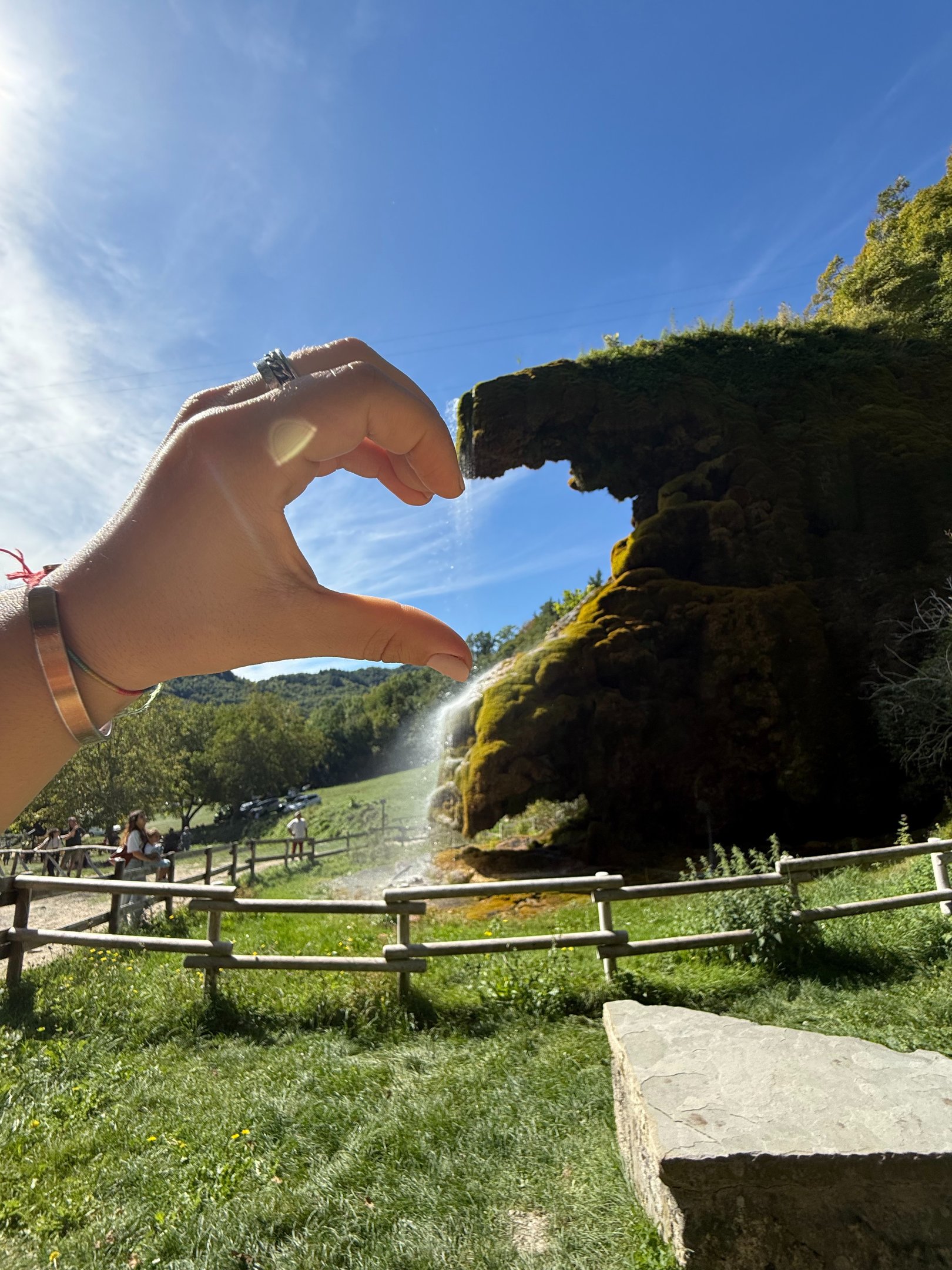
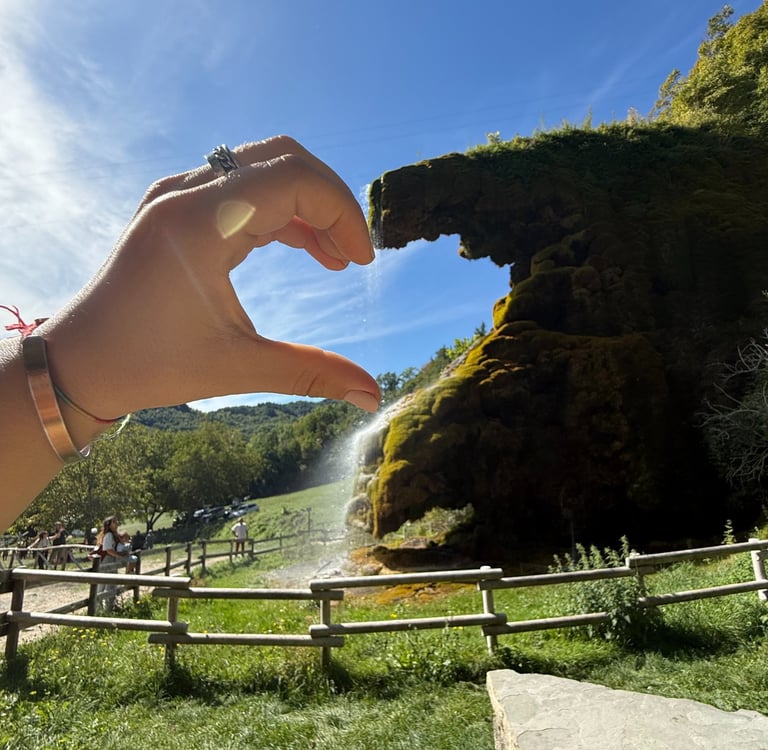
There are places that seem designed to amaze, to teach, and to make us feel small before the greatness of nature. Spots where you wouldn’t be surprised to see a Superquark crew jump out of a 4x4, set up their camera, and start telling ancient stories. One of these places is undoubtedly the natural complex of the Labante Caves—an overlooked jewel of the Bolognese Apennines that you’ll never forget once you’ve seen it.
And what if I told you that just a few steps away there’s another unknown and surprising natural treasure? We’re talking about the Aneva Waterfalls, the perfect addition to a nature-filled itinerary of geology, water, and breathtaking landscapes.
This is your mini-guide—ideal for curious travelers, creators, photographers, and lovers of natural wonders. Get ready to discover everything that makes Labante—and nearby Aneva—an experience worth living at least once in a lifetime.
The unexpected heart of the Apennines
The Labante Caves are located in Castel d’Aiano, in the province of Bologna, in an area where dense forests, ancient villages, and unique geological formations come together.
Here, nature has been writing its own story for millennia—slowly, drop by drop. Labante is actually the largest primary travertine cave in Italy, formed by the accumulation of salts and minerals left behind by flowing water.
But what makes this place truly incredible is that…the cave is still growing today.
How does a travertine cave form?
The birth of the Labante Caves is a small scientific miracle.
Everything starts with water: a spring rich in bicarbonate and calcium rises from underground and flows out into the open air. A natural reaction releases carbon dioxide and allows calcium to settle.
Imagine:
a drop,
then another,
and then another…
What looks motionless to the eye is actually a process in constant motion.
Thousands of years of this slow metamorphosis have shaped:
natural arches,
hollow vaults,
terraces,
porous rock walls,
small bowl-shaped pools that gave rise to the name “Grotta dei Piatti” (“Cave of the Plates”).
Mosses and tiny plant organisms also contribute to the formation of “living travertine,” accelerating mineral deposition. A cooperation between water, air, and life—a form of bio-geology.
The Cave of the Plates: the heart of the complex
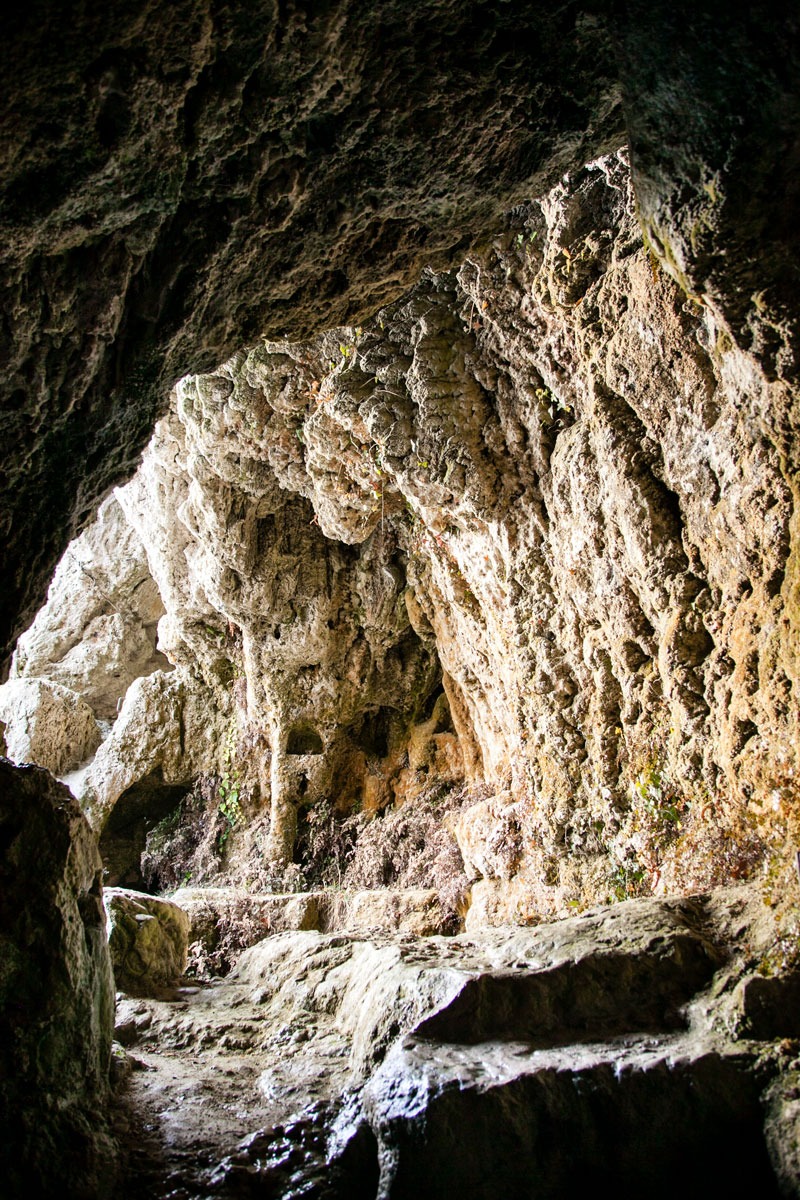
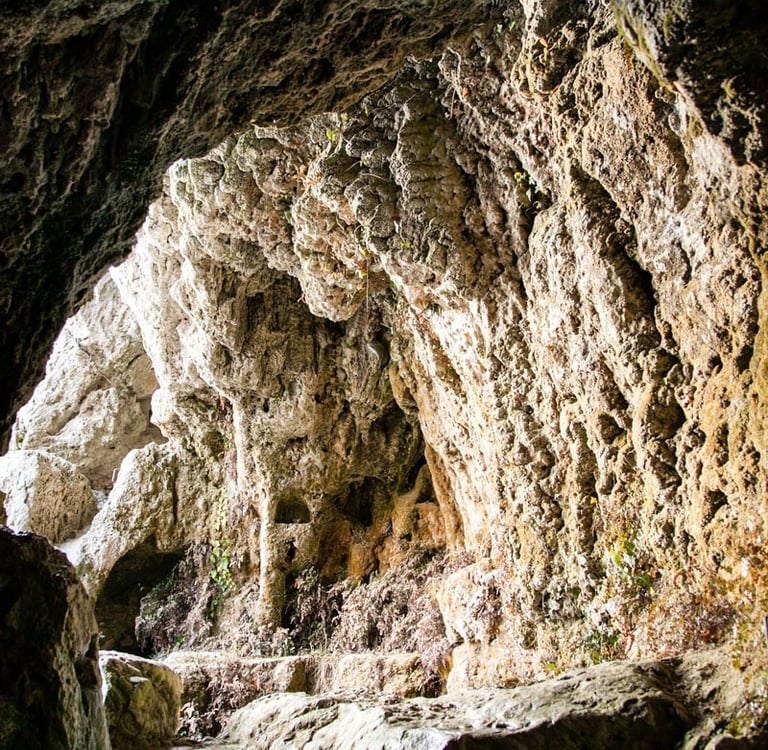
The main chamber is a fascinating space, perfect to explore slowly while breathing in the fresh moisture from the flowing water.
Inside you’ll find:
small natural passages,
cracks where an almost mystical light filters in,
developing stalactites,
porous walls that tell the story of the rock in layered pages.
The cave isn’t deep like traditional karst systems—it’s more open, bright, and accessible. Ideal for stunning photography.
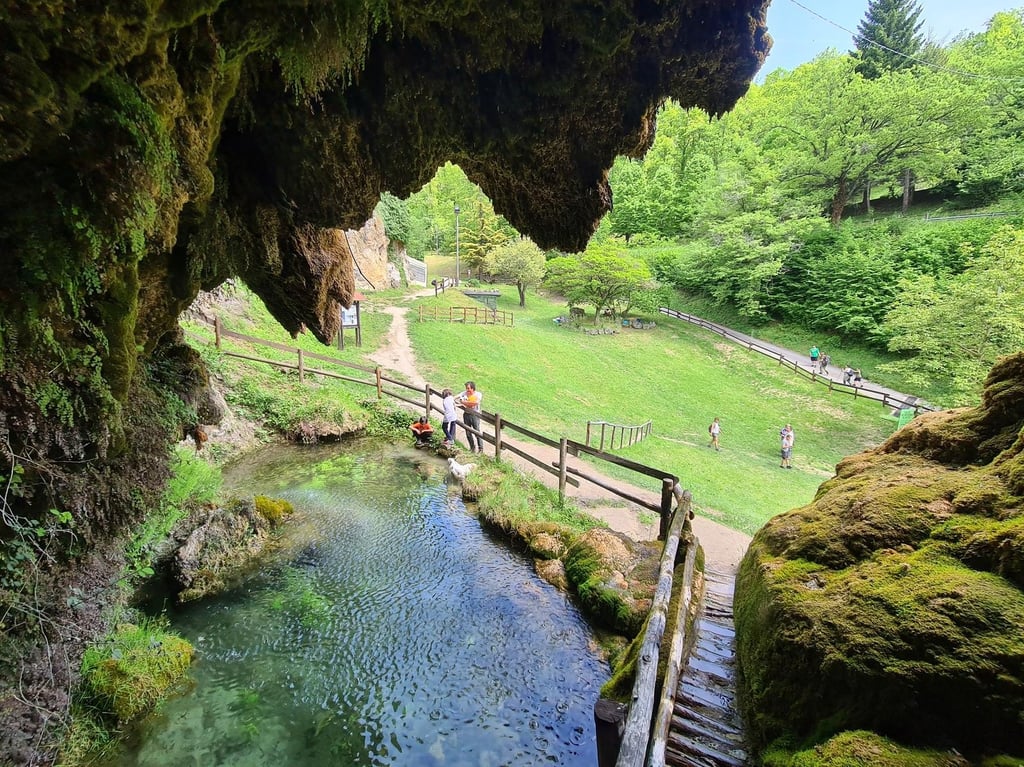
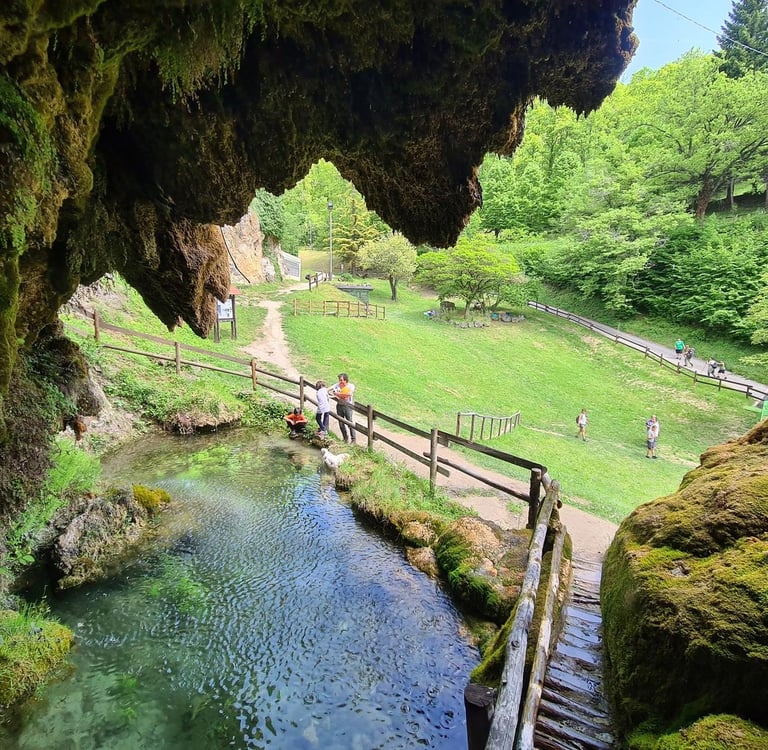
The Aneva Waterfall: one of the most scenic in the Apennines
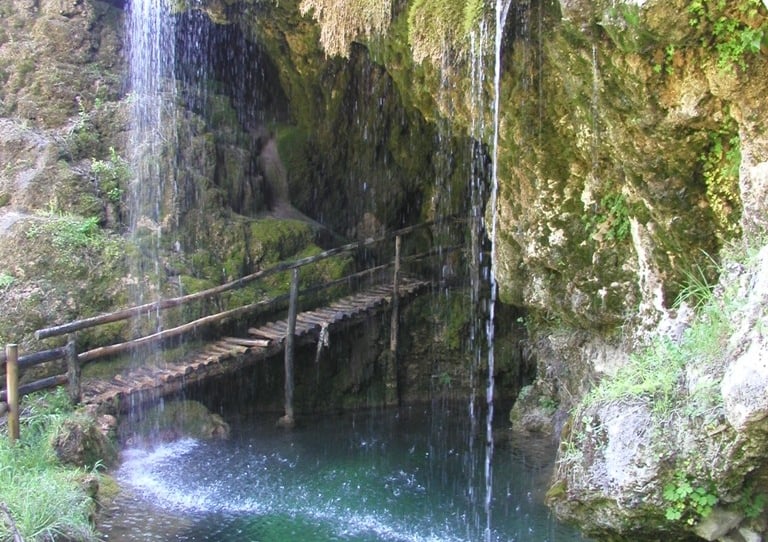
Above the cave flows a waterfall that looks straight out of a movie set.
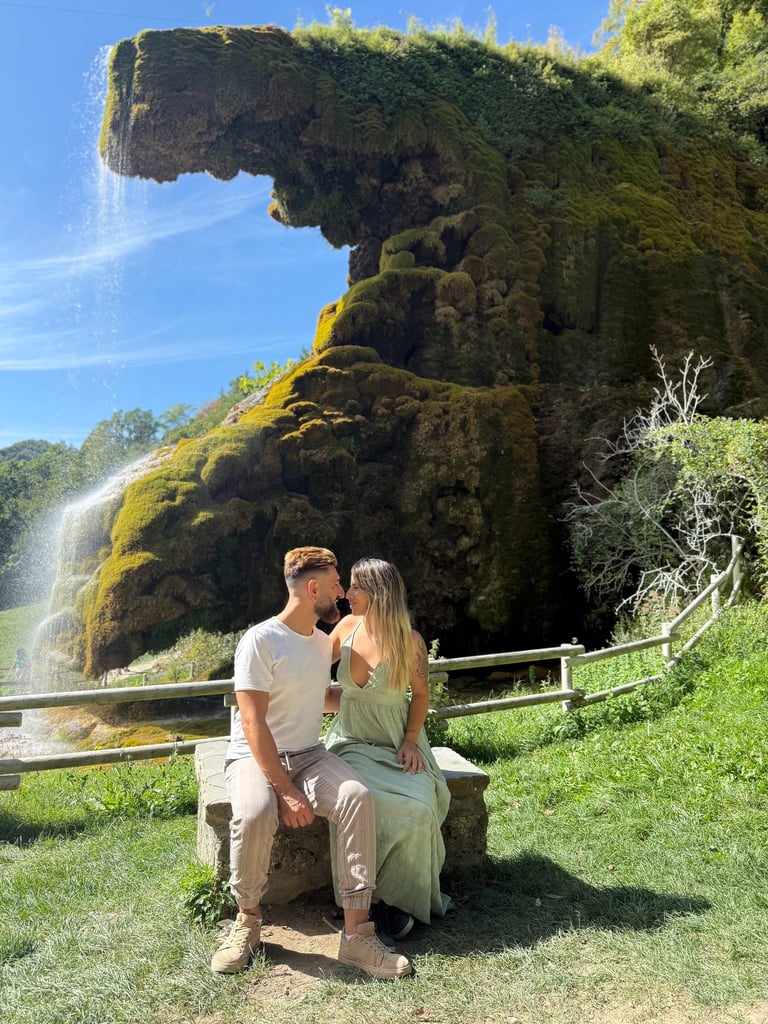
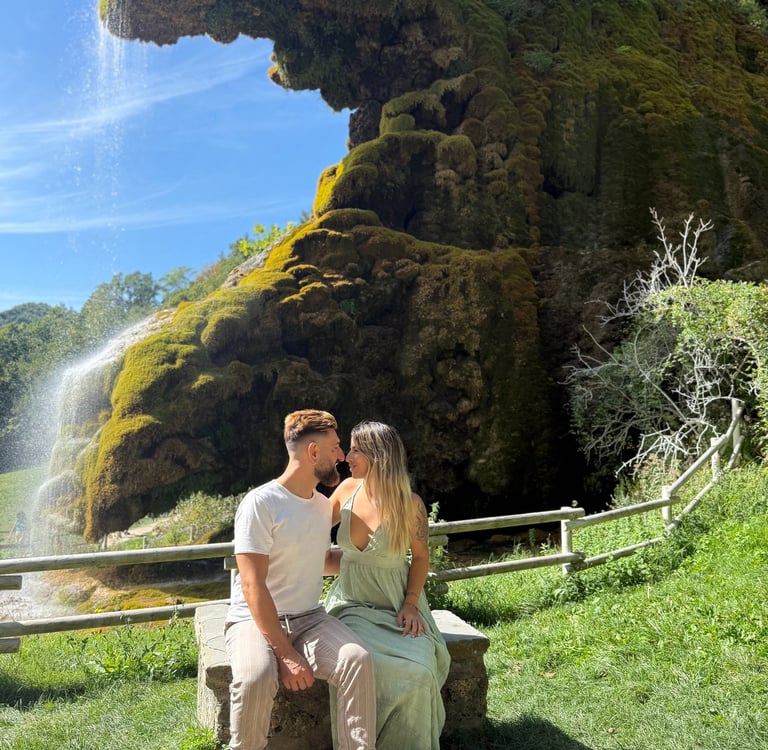
The water slides down a massive travertine dome, creating a liquid veil that changes color and intensity with the seasons.
In spring it’s strong, lively, and sparkling.
In summer it becomes a glossy, almost transparent curtain.
In autumn it’s framed by red-gold leaves.
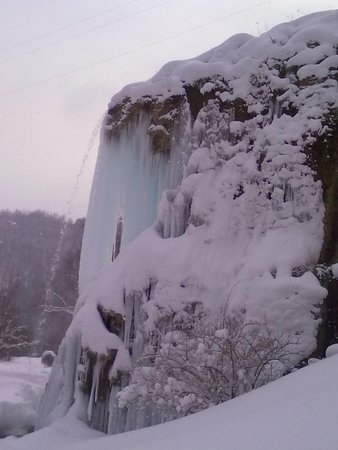
In winter it transforms into an icy wonder, with icicles that look like sculptures.
The emerald pond: a tiny natural Eden
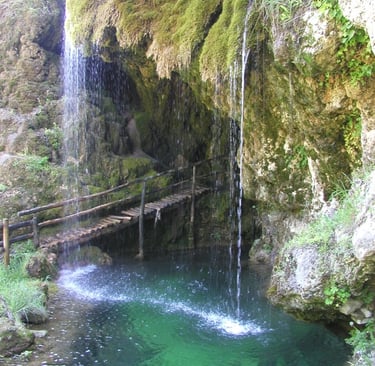
At the foot of the waterfall lies a natural pool that seems taken from a tropical park. The water is cold, crystal-clear, and often turns an intense shade of green thanks to minerals and plant reflections.
You can’t swim here, but it’s perfect for:
nature-themed portraits,
creator-style video clips,
relaxing while listening to the flowing water.
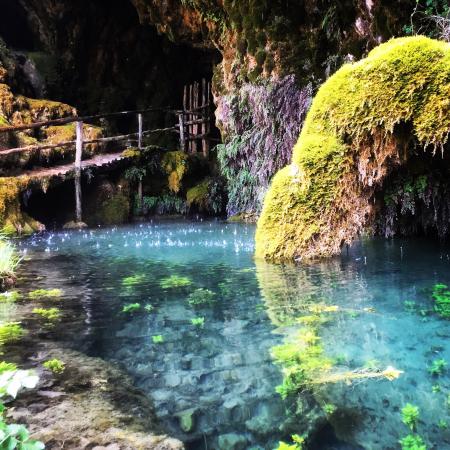
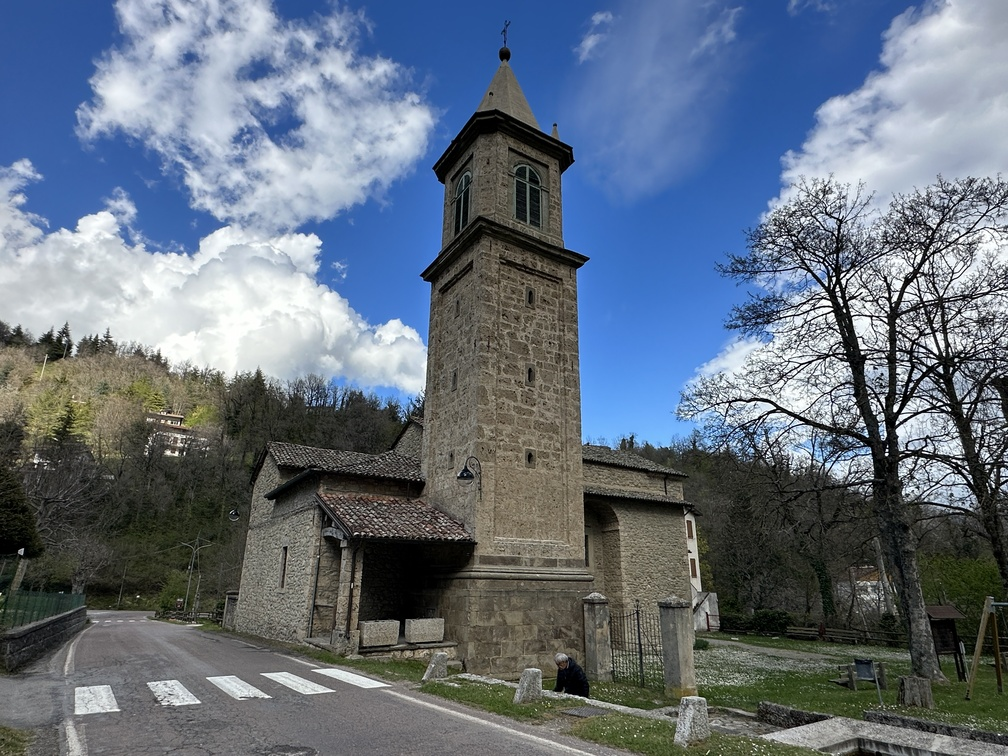
The Church of San Cristoforo: spirituality among the rocks
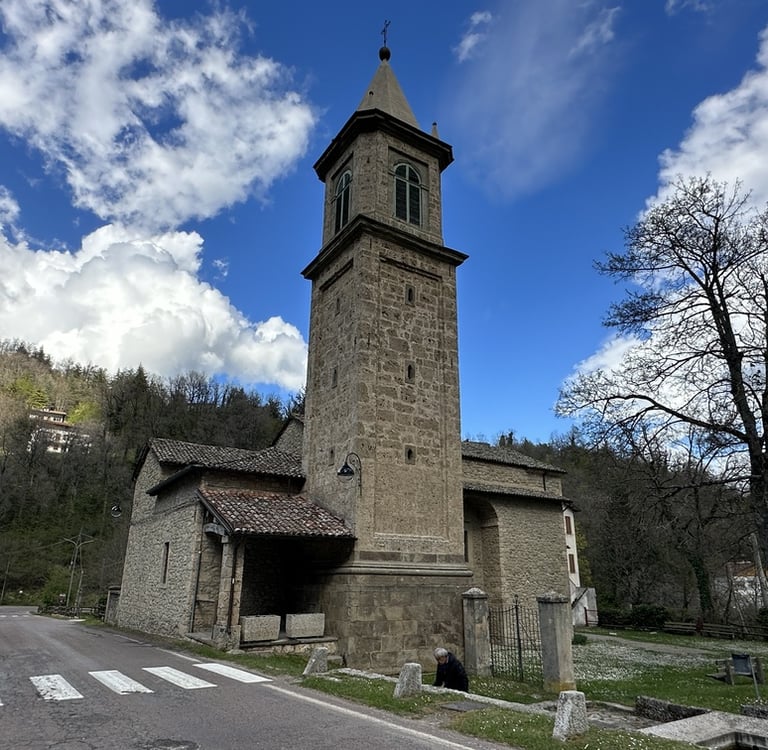
Just a few steps from the waterfall stands the charming Church of San Cristoforo, a small stone building perfectly blended into the surrounding landscape. Its simple, almost monastic look enhances the natural atmosphere. The church creates a harmonious dialogue between history, spirituality, and nature—a balance that gives the place a unique, timeless charm.
Things to do around Labante and Aneva
This corner of the Apennines is a treasure chest of activities:
1. Easy trekking
The trail along the Aneva stream is suitable for everyone, including families with children. You’ll walk beside the water, over natural bridges, moss-covered rocks, and stretches of dense forest filled with the scent of moisture and leaves.
2. Picnics in the green
The open area in front of the waterfall offers perfect spots to relax among trees, shade, and the sound of water.
3. Nature videos & creative content
The combo of waterfalls, caves, and light effects is ideal for lifestyle, travel, and educational content.
4. Geological exploration
Here you can literally touch rare phenomena such as the formation of living travertine.
Labante Caves and Aneva Waterfall are a journey into Italy’s rawest nature and geological heritage. They’re not just destinations—they’re experiences that enrich, calm, and amaze.
Nature here reminds you that even slow things can be extraordinary.
It’s the kind of place that stays with you—and above all, it’s still a hidden gem. Discover it now, before it becomes mainstream.
These sites are wonderful in every season: spring brings abundant water, summer offers a cool break from the heat, autumn dazzles with red-orange-gold colors, and winter paints spectacular icy patterns.
Practical tips
Wear non-slip shoes: mist from the waterfall makes surfaces wet.
Bring a sweater even in summer: the cave area is cool.
Respect nature: don’t touch the rock—travertine is extremely fragile.
Avoid drones in protected areas: check local regulations.
Visit early morning for crowd-free photos.
Save this guide, share it with your adventure-loving friends, and start planning your visit to the Labante Caves and the Aneva Waterfall.
And don’t forget to follow us on our social channels!
We can’t wait to welcome you into our big family!
Contacts
Follow us on our social media
Follow Us
Newsletter
zainoinduerebecap@gmail.com
© Copyright 2026 - Zaino in Due | Privacy Policy | Cookie Policy
Fill out the form to subscribe to the newsletter, join our community and stay up to date.